Images:
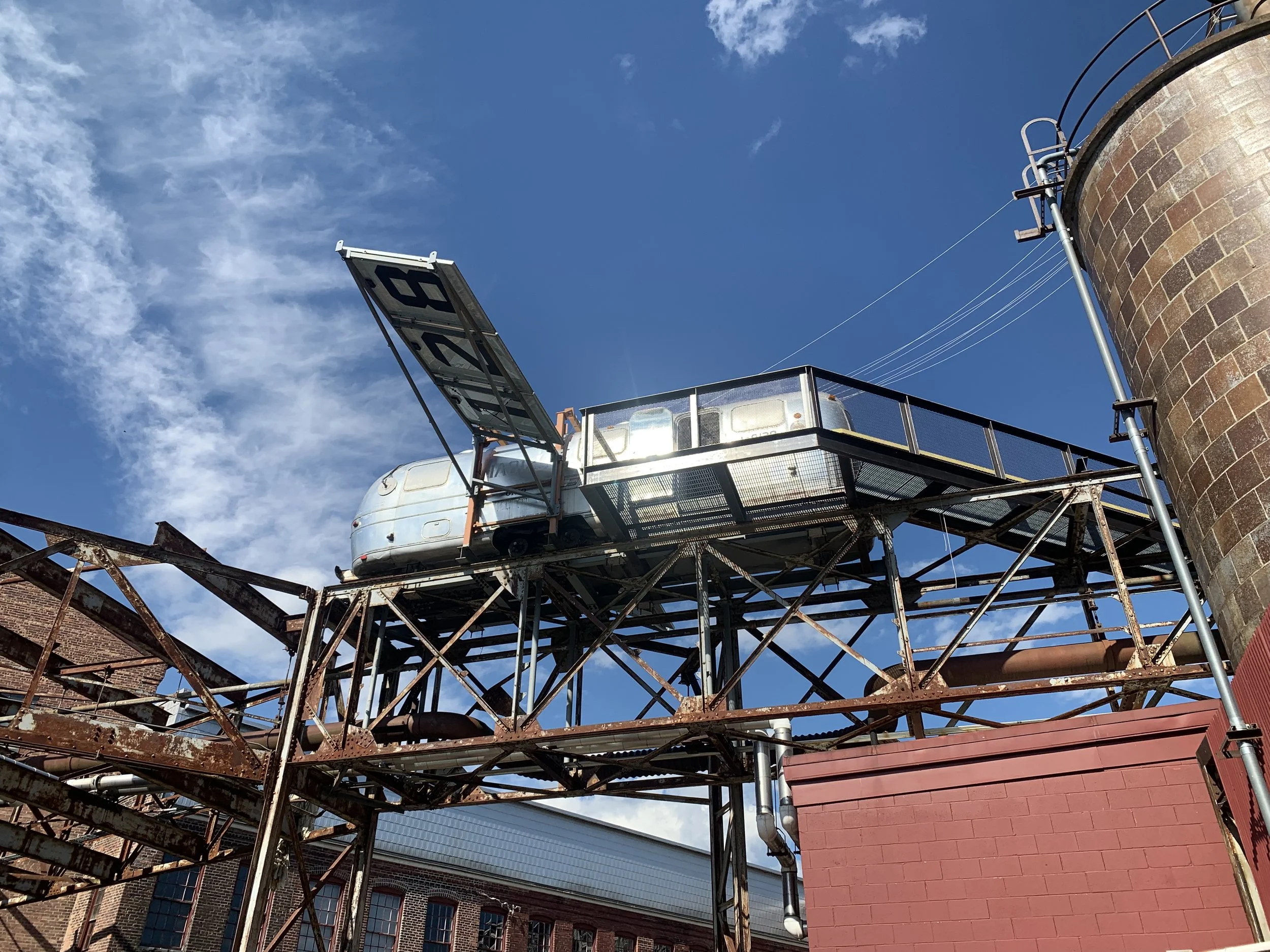
Top Left- Exterior of Oatman’s All Utopias Fell, a silver airstream trailer/space ship placed on metal rebar walkways
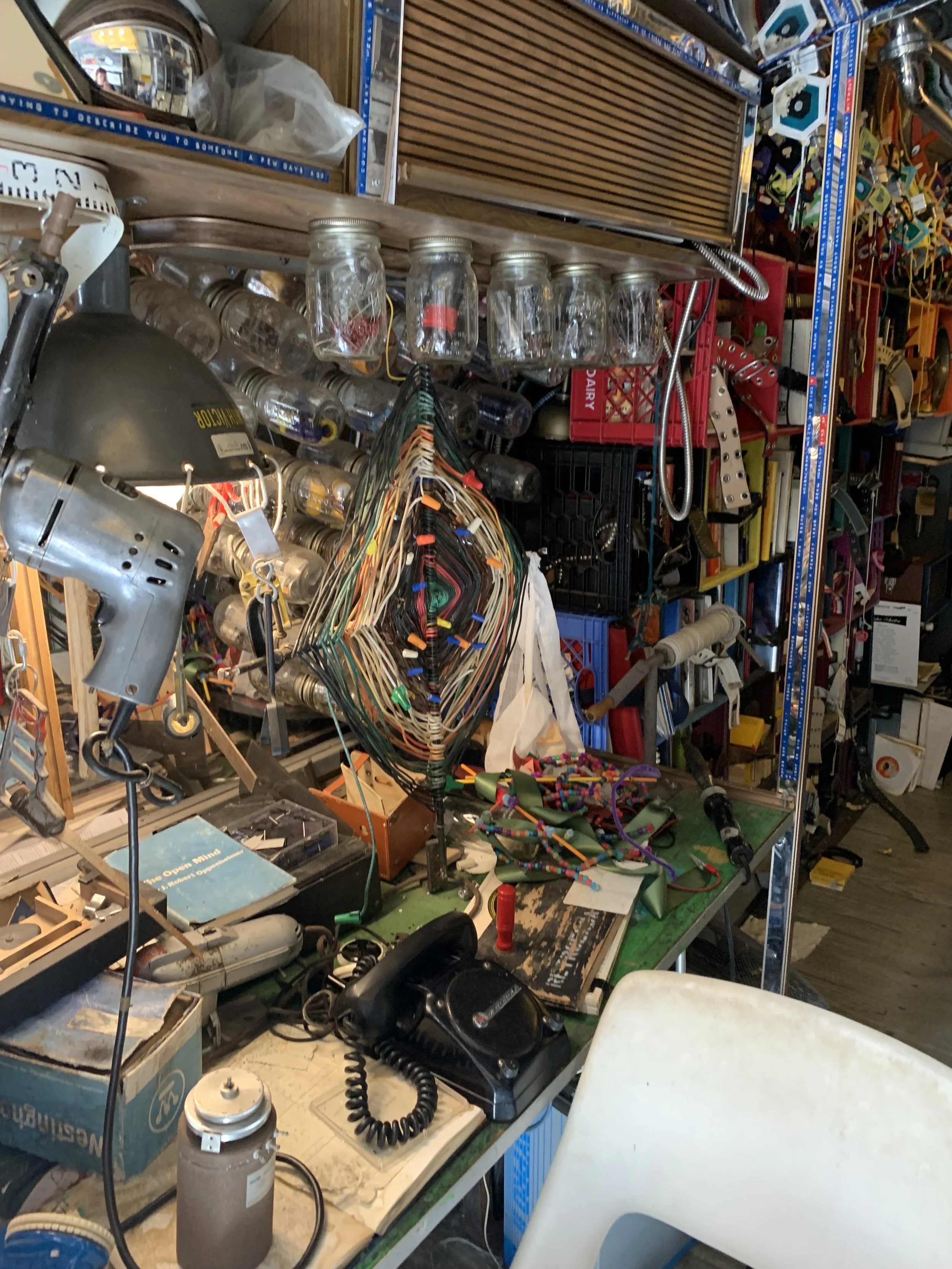
Top Right: Interior of a cluttered desk within the space ship
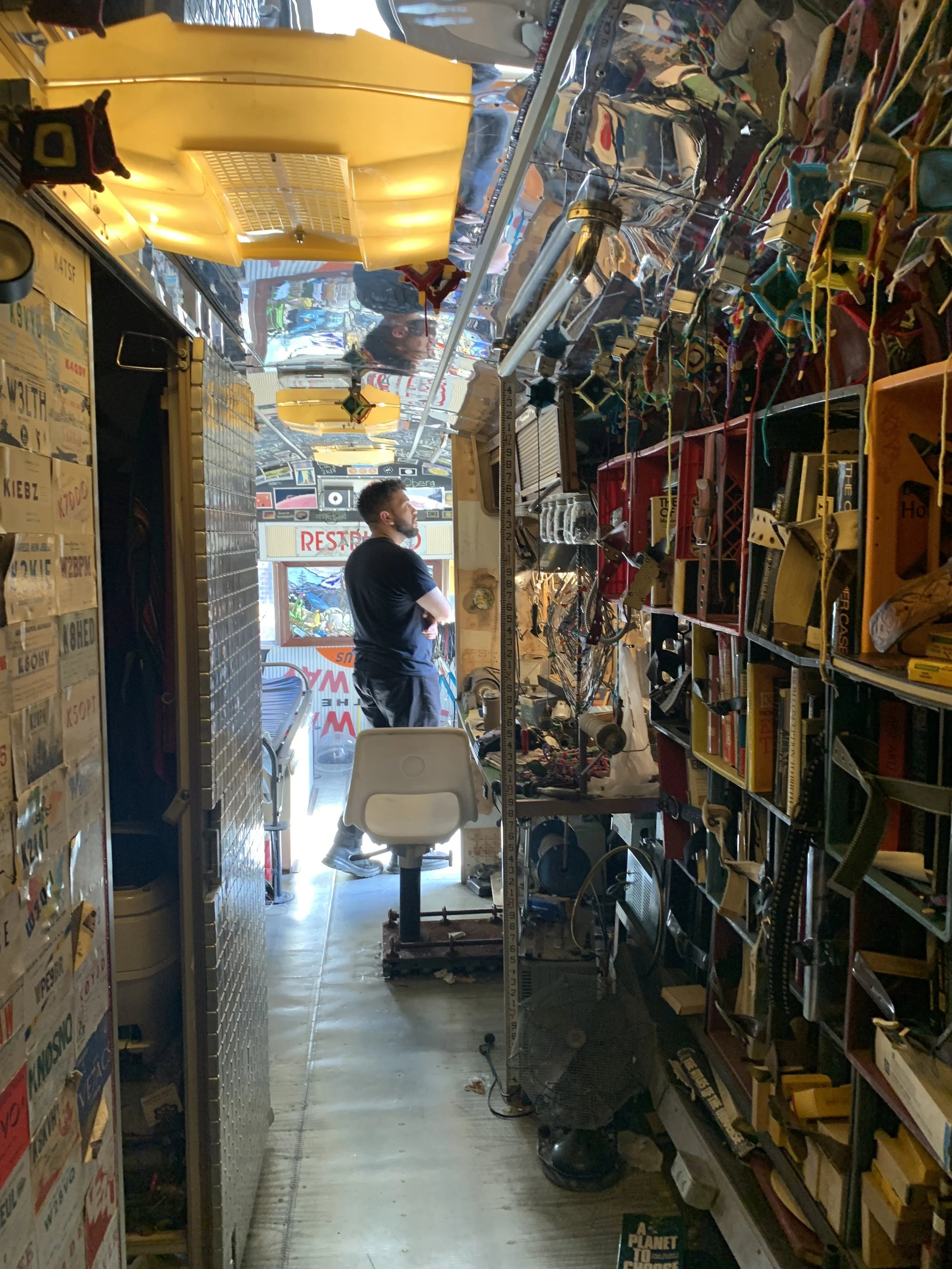
Bottom Left: cluttered space photos covering the walls, and one of Oatman’s collages of a cowboy beneath the sun.
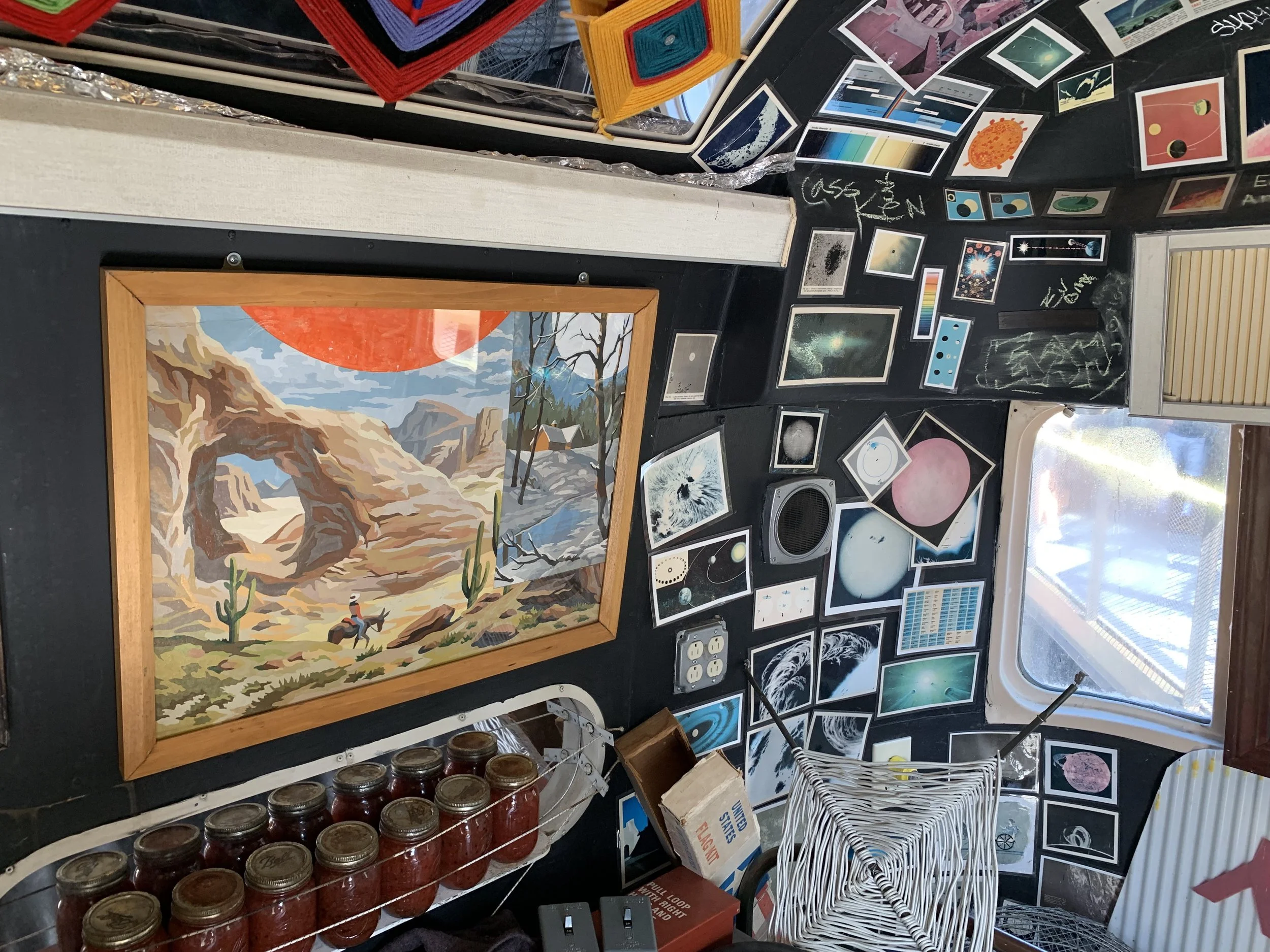
Bottom Right: A long shot of the spaceship’s interior, with views of the cluttered walls and overwhelming bookshelves.
5/26/26- Inspiration Highlight #1
All Utopias Fell (The Shining, The Library of the Sun, Codex Solis)
Art makes me cry regularly, though it does not usually make me sob.
In July 2024, I insisted I needed to go to the MASSMoCA, my favorite contemporary art museum. I had the developmental work “finished” for what would become the AnarkHive’s first draft, but I hadn’t yet begun writing and did not know I still had two years of work ahead of me. Still, I had a vision of Magnolia in my head (at the time called Hutch). It had a tactility in my brain, a spaceship filled to the brim with art books, clutter, carpet, and one engineer’s overflowing desk.
And then I saw Michael Oatman’s All Utopias Fell.
It was fifteen minutes before the museum closed. My partner and I were wandering the museum’s grounds, not trying to leave yet but headed vaguely toward the exit. A shout caught my attention — a woman standing on a rickety metal structure high up in the air, waving to us. Now, people in Massachusetts don’t tend to flag down strangers for no good reason, but her greeting raised numerous questions of how she got up there.
I never met that woman, and I’ve never met Oatman, but All Utopias Fell changed everything. Oatman cites inspiration from the same pulp aeronaut sources as me. My first instinct upon walking into the Airstream trailer’s interior spaceship was to leave. I was overwhelmed with the sensation that I’d intruded into someone’s life. Once I realized that, no, the art piece is designed to feel that way and no one was going to yell at me for intruding, I broke down sobbing. At the time I felt like I’d been living in the world of the AnarkHive for ages, even though it ended up being only a drop in the bucket from where I sit in 2026 now.
This art piece looked, smelled, felt, and sounded like the spaceship I’d constructed in my head. Magnolia had already been born in my mind’s eye, and here she was in physical reality. In fact, she’d existed since 2010. Oatman describes this space as a three dimensional collage. More importantly, it feels beyond simply the third dimension to the viewer. He created the work in 2010, thinking toward the future, witnessed by many over time but by me specifically fourteen years after its birth as I too thought about the future. And now I sit in 2026 and think about where the future is headed next.
Solar energy felt like such a boundless technology in the ‘10s technological shift. Now that its viability is threatened, not by obsolescence but by those in power with greater stake in clinging to fossil fuels, I find something wistfully innocent about Oatman’s future. I resembles my own innocence when this story simply existed as an idea in my head, before the train, before the lost pilot, before critique, before the publishing machine. I cannot help but love it.
The changing of what constituted “collage” helped me to reconsider the collage of my writing. The AnarkHive project is a mosaic of my own mind, of watching my father’s movies, of desires I always wanted to chase within stories, of that wistful hopefulness that humanity will shine beneath the sun even when times are hard. The Library of the Sun’s environment tells the story of a lonely aeronaut finding time to make arts and crafts while hurtling back toward earth.
So I wrote the story of the engineer I thought would sit in that chair. And then I rewrote it again.
I’ve never been happier.
Thank you, to the woman who called to me from high above, beaconing me to check out something cool. I hope I can do the same for someone else one day.